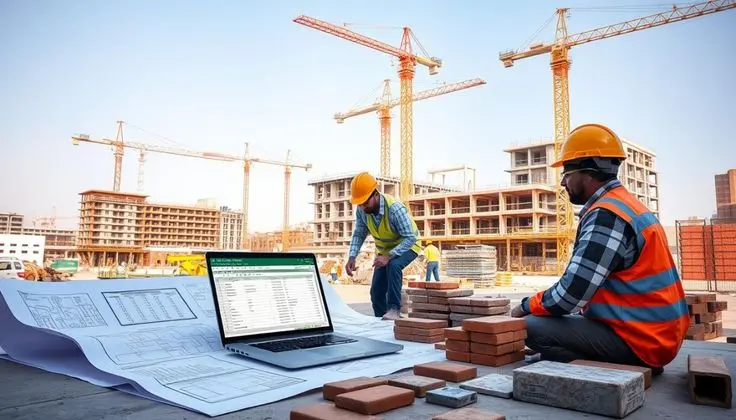
Research Gate study shows that about 70% of all buildings are constructed with masonry. Understanding masonry material and cost is crucial. Masonry looks appealing but is capable of lasting over centuries. Several materials can be used for masonry, like stone, bricks, concrete, and glass blocks.
Each material offers distinct advantages and a varying cost tag. Masonry construction may seem expensive, but its ROI makes it a worthy investment. Let’s understand what is masonry construction in detail, so that you can make better choices for your house construction.
Introduction
What Is Masonry?
Masonry construction involves bricks, stones, or other materials held together with mortar. The mortar is a bonding component of masonry. This material is used in the overall construction structure. Popular materials that are used in masonry include bricks, stones, glassblock, structure clay tiles.
Masonry is bonded in various patterns. These include stack bond, running bond, English bond, Flemish bond, stretcher bonds, and more. Each of the bonds offers better durability and appeal than the other. Stretcher bond is the most common in the USA, since it’s affordable, easy to install, and durable on a single brick-thick wall.
Common materials used in Masonry
Here’s an overview of the different materials used in masonry
Bricks: Different types of bricks include clay bricks, lime-siliceous bricks, concrete bricks, or fly-ash bricks. The bricks can also be hollow, solid, or tubular in shape. As per RSMeans data, brick masonry costs about $10 and $45 per square foot.
Stones: Stone is the longest-lasting masonry material. It lasted hundreds of years. Stones can be used in either irregular form or by cutting them into uniform shapes. Stone costs about $15 and $40 per square foot.
Glass blocks: Glass-block can be hollow or solid glass. It is usually installed using frames or channels. These blocks are translucent and not transparent, allowing sunlight to enter while maintaining the privacy of your home. Moreover, they provide good thermal and heat insulation. Glass blocks cost about £7 – £67 per block.
Structural clay tiles: Structured clay tiles are made of burned clay, fireclay, shale, or terracotta. They consist of hollow cavities inside them for reduced weight and better insulation. They last 50-100 years. According to the RSMeans database, structured clay tiles cost $10 to $25 per square foot.
Understanding the type of masonry, lifespan, and features allows you to make better choices for your home construction. Here’s a table showing detailed data about different types of masonry, allowing you to make a better choice.
Masonry work is a major part of any build; to see how these material choices impact your total budget, check out our comprehensive guide on house construction cost.
Key Benefits of Masonry
Hiring an expert for masonry estimation and installation shows you the best masonry option for your construction needs. Here are a wide range of benefits masonry offers over wood, timber, and dry construction systems.
- Masonry is able to last several decades and even centuries.
- Masonry is fire-resistant, since it is non-combustible. For this reason, most fireplaces are constructed with masonry.
- Masonry improves a property’s resale value significantly. This is due to the improved structure’s strength and the quality appeal of masonry buildings.
- Masonry comes in different shapes, colors, and finishes. It provides an attractive appeal and texture to your home.
- Masonry is resistant to corrosion, rotting, insects, pests, harsh climates, and several disasters.
- It can bear an immense load and multi-story buildings
- Masonry provides great insulation and reduces internal temperature for better cooling and heating.
- Masonry construction promotes sustainable construction methods, and the material is also recyclable.
- Low installation and maintenance costs as compared to wood.
Types of Masonry Construction
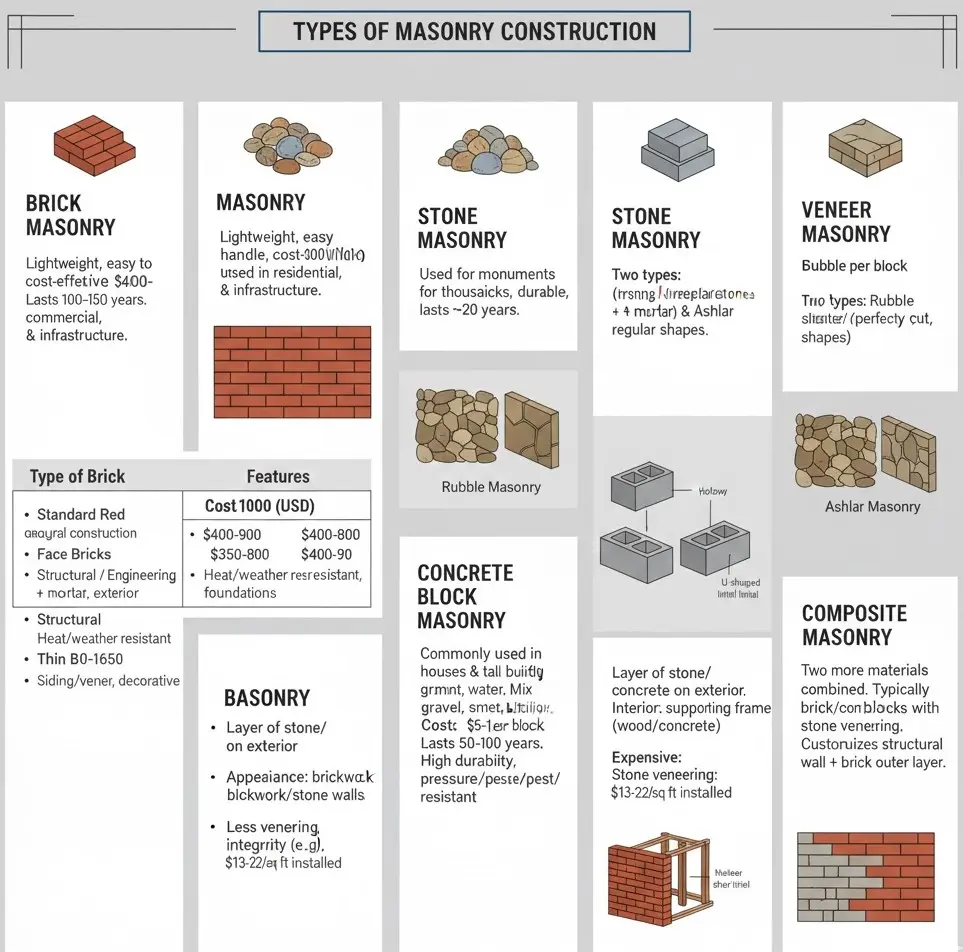
Here are diiferent types of Masonary Construction.
Brick Masonry
Brick masonry is lightweight and easy to handle. These are much cheaper cost effective than stone or concrete masonry to install. Brick masonry can last about 100 to 150 years.
The durability and strength of brick masonry depend on the type of brick and bonding pattern used. Here’s a complete cost breakdown of the different types of bricks and their cost according to the US market.
| Type of Brick | Cost per 1,000 Bricks (USD) | Features |
| Standard Red Bricks | $400 – $900 | Rough finish, general home construction, covered with plaster, mortar, or other finishing material |
| Face Bricks | $350 – $800 | Excellent thermal properties, weatherproof, used for exterior walls |
| Structural / Engineering Bricks | $400 – $900 | Heat and weather-resistant, cavities for cement bonding, high compressive strength and durability, used for foundations and reinforced walls |
| Thin Bricks | $800 – $1,650 | Used for brick siding or veneer, decorative, have a protective layer, thinner than usual bricks |
Bricks and masonry are used in residential, commercial, and even infrastructure construction.
Stone Masonry
Stone masonry has been used in constructing monuments and infrastructure for thousands of years. Stone is stronger than bricks and can handle high pressure. It is durable and lasts for nearly 200 years.
The two most common types of stone masonry include rubble masonry and ashlar masonry. The rubble masonry uses irregular stones assembled with mortar. While the ashlar masonry has perfectly cut stone in regular shapes and is then laid out to assemble.
Concrete Block Masonry
Concrete blocks are one of the most used masonry materials. They are used in both small houses and tall buildings. It is made by mixing gravel, sand, cement, and water. Concrete blocks can be made in different shapes that include stretcher, U-shaped lintel, or hollow.
Concrete blocks cost up to $5 to $14, depending on the type of concrete and your location. Moreover, concrete masonry can last from 50 to 100 years. Dense concrete blocks have high durability and are able to withstand high pressure. They are also highly resistant to pests, fire, and extreme weather.
Veneer Masonry
Veneer masonry involves adding a stone or concrete masonry layer to an exterior. The interior consists of a supporting structure frame, typically made of wood or concrete. The outer structure appears to have a strengthened masonry of brickwork, country-style wall, or stone walls. However, it is less costly and lightweight than traditional masonry.
The most common type of veneer masonry building is stone veneering. It cost at about $13 to $22 per square foot for installation.
Composite Masonry
Composite masonry is the process involving two or more materials for the construction of masonry. Typically, brick or concrete blocks with stone veneering are used. It is quite expensive, with a price range of $40 to $70 per square foot.
These techniques allow you to customize your structural integrity and strength. For example, a building with a concrete wall with an outer brick layer. Now, a concrete wall may bring structural strength while bringing more durability.
How Masonry Work Is Done
Thinking of what is masonry work? Masonry installation involves the following process:
Preparatory work
The construction site is prepared first. This includes clearing debris, loose soil, and rocks. Equipment such as a trowel, plumb lines, scaffolding, mortar boards, cutting tools, and more is gathered.
Mixing Mortar:
Now, mortar is mixed and added to the material. This is to bond the units firmly.
Mortar is mixed to bond the units firmly. (Pro Tip: If your masonry project involves a foundation or floor, see our latest guide on concrete slab cost).
Laying Initial Rows:
Now the first rows of the blocks, bricks, or stones are laid out. Attention to detail is required to make sure that the first rows are uniform and horizontal.
Filling Remaining Masonry:
Now the rest of the bricks and blocks are placed and bound with mortar. Every unit is added sequentially, with accurate wall alignment.
Seam Processing
After the masonry has been completed, the spaces between the units are filled using mortar. Plaster or other material.
Final Cure and finish
Now the structure is left to rest. This gives masonry the time to attain the strength and stability of masonry work. Now the remaining. It is then cleaned of any dirt, debris, or mortar for smooth output.
Understanding the step-by-step masonry process is crucial for project planning; you can further explore our construction feasibility study to see how these stages fit into your overall building timeline
Load-Bearing vs Non-Load-Bearing Masonry
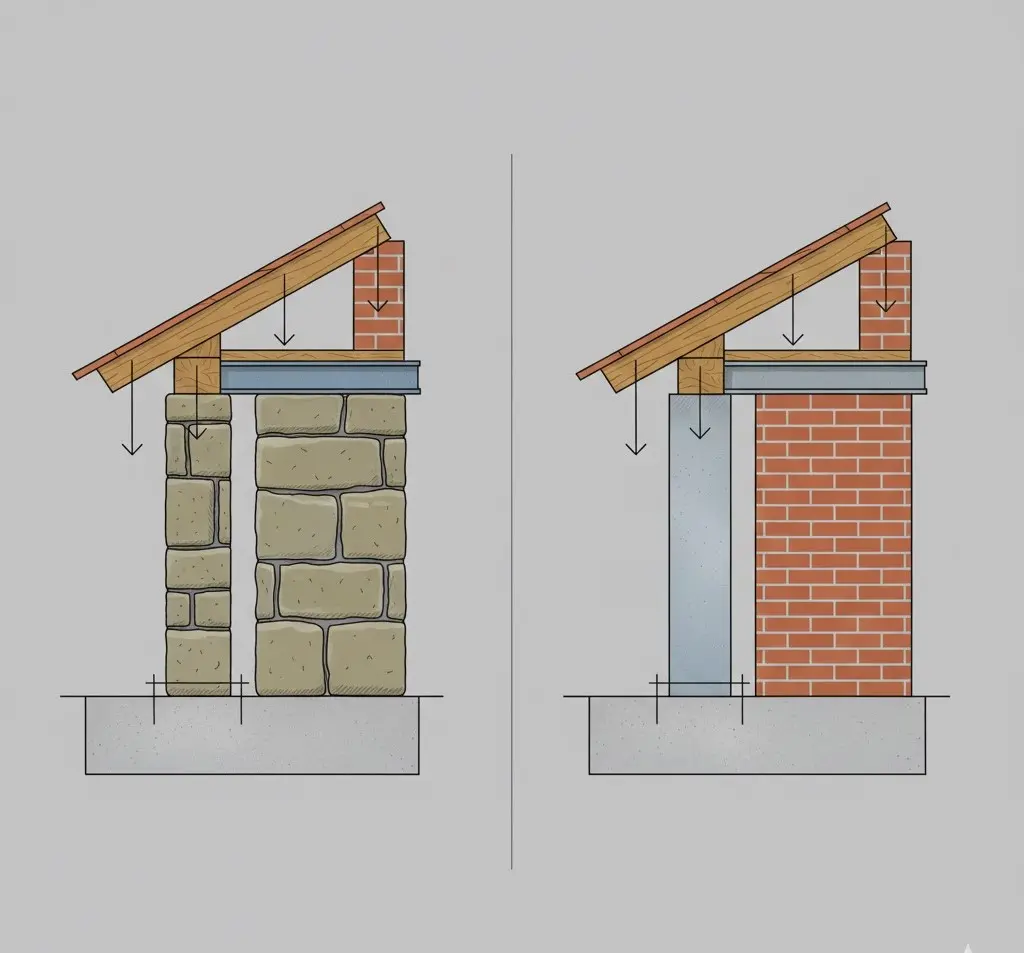
There are two main types of masonry. Load-bearing and non-load-bearing masonry. Each have specific function and characteristics. Load-bearing walls are strong building structures that transfer the weight of the building directly to the foundation.
They can be added to the interior or exterior of the structures and are thicker to carry high pressure. The installation and labor cost is generally more expensive than non load bearing strucutres.
Non-load-bearing structure masonry involves thinner structures that are not capable of handling the load over the roof. Infact these structures hardly carry their own load. They are commonly installed in the interior for aesthetic purposes.
Common Applications of Masonry
Masonry is used for both interior and exterior walls, chimneys, and finishes. Masonry buildings make different uses of masonry installation. Here’s a breakdown.
Residential Masonry Use:
- Exterior home walls
- Supporting walls and chimneys
- Basement and retaining walls
- Fence columns and gate pillars
- Firepits and roof cellar walls
- Decorative and appealing columns
Commercial Uses:
- For schools, hotels, and high-rise buildings
- Compartment walls for factories, malls, and offices
- High load bearin warehouse walls
- Tower masonry, cladding substitution, or transformer enclosures
- Strengthened structural columns and beams
Choosing the Right Type of Masonry
Looking for the best masonry units for your home or building? Well, you need to understand your construction purpose and the function it would serve. You also need to evaluate your budget to choose the most suitable type of masonry.
For example, brick masonry is suitable for a home due to its easy installation and high stability. It hardly requires maintenance after 30-50 years and is cost-effective. You may also choose stone masonry due to its heritage style and longevity.
Similarly, glassblock or concrete block masonry is great for commercial purposes. It’s easy to install, has a great appeal, and compressive strength.
Note: Hiring an expert will help you make a more informed masonry installation decision.
Professional Considerations
Estimate Masonry Process:
Have a complete task breakdown and understand the material, labor, equipment, and cost involved in Masonry. This allows you to install masonry smoothly, avoid overspending, and prevent costly delays.
Focus Weak Masonry Points
Weak masonry points often develop due to wrong block placements or bonding issues. Ensure that the layers are even and that the material is placed in proper sequence. Add extra support to windows, doors, and corners so that it absorbs pressure effectively.
Properly Sealing
Effectively sealed masonry units prevent cracking, erosion, insects, and moisture.
Plan Your Home Layout
Get an experienced masonry installer who identifies how your home’s walls, floor, and foundation distribute load. This will allow you to make better masonry installation choices.
Know Your Mortar Compatibility
Mortar needs to be compatible with holding the masonry units. Choose between cement sand mortar, lime cement mortar, or lime mortar that balances durability and lasts longer.
To protect your project from unexpected issues during the masonry process, it is vital to set aside a construction contingency that covers potential repairs or structural adjustments
Advantages & Limitations Recap
| Masonry Material | Cost | Lifespan | Features |
| Bricks | $7.00 and $12.00 per square foot | 100–150+ years | Durable, fire-resistant, thermally efficient, versatile |
| Stones | $58.50–$260 per sq ft | 200+ years | Extremely durable, natural aesthetics, low maintenance |
| Concrete Blocks | $10–$30 per block (standard) | 50–100 years | Strong, cost-effective, easy to install, and can be reinforced |
| Veneer Masonry | $4–$22 per sq ft | 50–100 years | Decorative, lightweight, covers structural walls, aesthetic flexibility |
| Glass Blocks | $15–$60 per block | 50–75 years | Allows light transmission, water-resistant, modern look |
| Structural Clay Tiles | $4–$32 per sq ft | 75–150 years | Hollow, fire-resistant, lightweight, load-bearing capability |
Note: The cost of masonry installation is affected by several factors, like masonry type, labor, location, and project scope. According to the latest RSMeans data and market rates, masonry construction typically costs $34.22 – $46.98 per square ft.
Ready to finalize your budget? Use our free tool to get a precise estimate for your entire building project instantly.
Conclusion
Masonry remains a cornerstone of construction due to its unmatched durability, strength, and long-lasting abilities. This article comprehensively defines “what is masonry” and its various types. Understanding masonry materials, bond patterns, and construction techniques helps ensure long-lasting, high-quality results for diverse projects.
Looking for reliable masonry estimates? Whether brick, steel, cement, or finding out the best mortar patterns, we bring expert insights. Cost estimators provide a detailed breakdown of the masonry process timeline and cost.
FAQs
Is a special type of paint required for masonry?
Yes, use a specialized type of paint designed to use for porous exterior surfaces of concrete, brick, or stone. It helps withstand weather, moisture control, and increases lifespan.
What are the three main types of masonry?
The most common types of masonry include brick, stone, and concrete. Other types, such as veneer and composite, are also widely considered.
How long does a masonry construction last?
The lifespan of a masonry project depends upon factors such as material, environmental conditions, and construction techniques. However, a well-built masonry construction can last for about 100 years, and more.