You will most likely hear the name all the time. Drywall, formally known as plasterboard or gypsum board, is one of the most common modern materials used in building. Its low cost, long-lasting properties and versatility now make it the preferred choice of material in residential and commercial interiors. Whether doing renovations in a single room, finishing a basement or building an entirely new home, drywall will be an integral part of your walls and ceilings. But when it comes to drywall, the first question you always hear from the owner of the home or the contractor is: “What is the cost of drywall installation in 2026?”
17374 When it comes to the cost of drywall installation, it can be difficult to determine even for professionals, since it can depend on several circumstances, such as which kind of drywall is used, labour costs, regional inflation, and the size and type of job. Some drywall installations will have a price variability depending upon the type of drywall, for example, the cost of drywall installation for fire-rated drywall, moisture-resistant drywall, or even ultra-lightweight drywall. This 2026 cost guide will explain everything you will need to know when calculating the cost of a drywall installation, and it will cover: average costs, material costs, using materials to save money, and even some frequently asked questions.
What is the cost of Drywall?
Drywall is an inexpensive building material at its core. However, drywall prices will vary depending on a few factors: the quality, thickness, and the application it is intended for. A regular sheet of drywall, 4′ x 8′, will generally run somewhere between $12 – $25 per sheet in 2026. That price is for your standard drywall used in most residential projects. If you are going with a product that might be fire-resistant, moisture-resistant or soundproof, expect to pay significantly more, upwards of $40 – $60 per sheet.
Also note that drywall costs are often based on either the sheet or the square foot. On average, drywall runs $0.50 to $0.85 a square foot, not including labour. The relatively low cost of drywall makes it one of the cheapest ways to finish an interior wall surface compared to alternatives such as wood panelling or plaster.
The total project cost will also measure how many sheets you need to complete the space. A 500 square foot room could cost between 15 – 20 sheets of drywall, depending on your layout and the number of cuts that need to be made to fit. The cost may also rise on larger or more complex projects due to waste, delivery fees, or speciality products.
Average Drywall Installation Cost in 2026
There are two components to consider for drywall installation costs in 2026. All the materials you need to purchase, as well as the labour fees. On average, a homeowner can expect to pay $1.50 to $3.50 per square foot installed. This price covers the drywall boards, screws, tape and joint compound, as well as the labour associated with hanging the drywall boards, taping the joints, mudding the joints and finishing the walls.
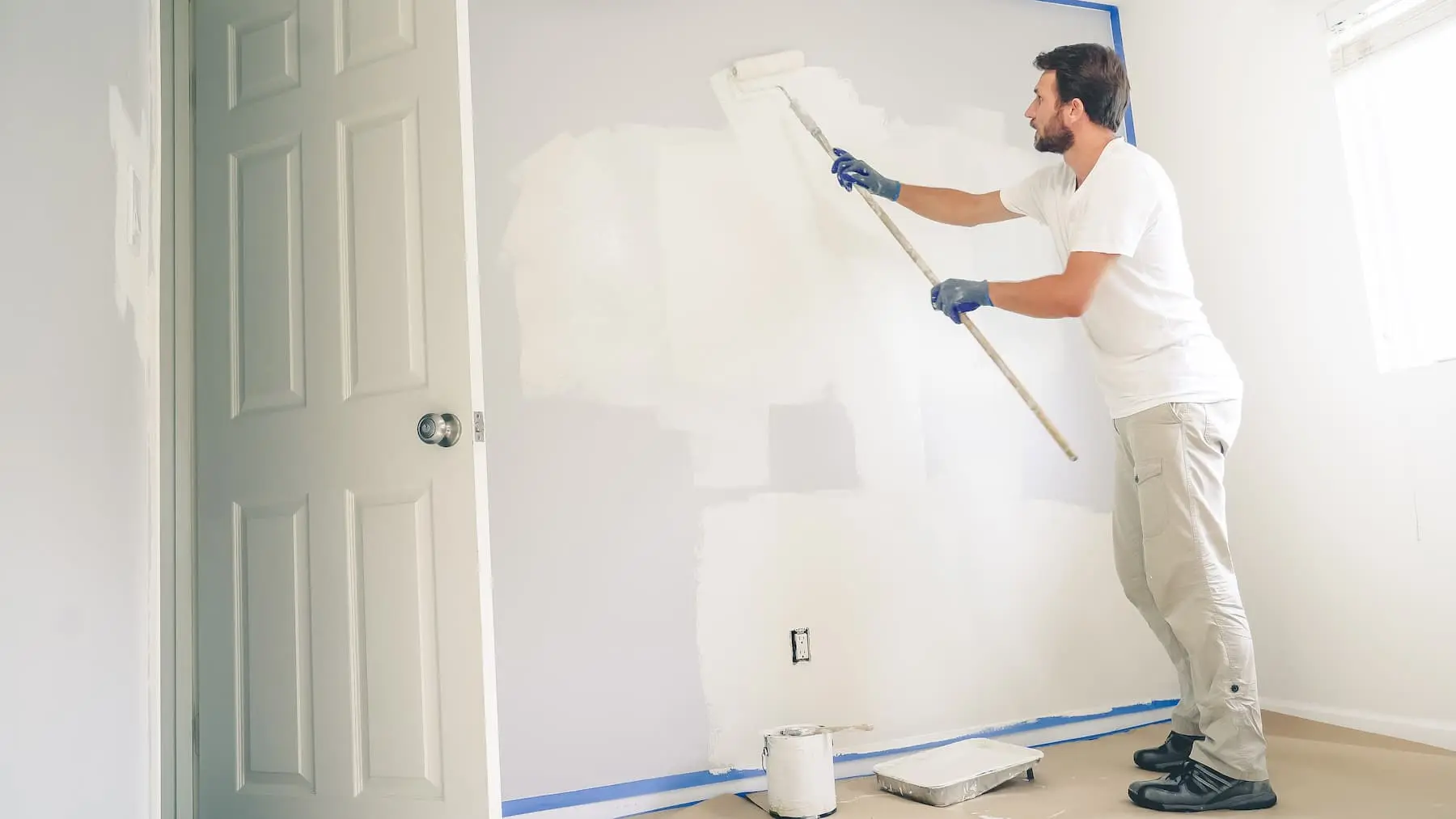
For an average-sized room that is 12×12 (approximately 144 square feet of wall area), the total cost for installation may total $500 to $1200, depending on the level of finish the homeowner desires and the overall complexity of the project. Here’s why the finish level is important:
A Level 1 finish (or Level 2, mudded only for a garage or utility type room) costs less.
A Level 3 or 4 finish (living space, painted wall) costs more because it requires additional sanding and coats of joint compound.
A Level 5 finish (the smoothest finish for luxury interiors, or for glossy type paint) costs the most because of the work associated with getting it smooth and level.
Installation could cost more for commercial buildings or custom homes due to the standards that need to be followed, or a special type of drywall being installed, as well as the increase in labour rates.
Sheetrock Price Per Square Foot Compared to Drywall
People often use the term “Sheetrock” interchangeably with drywall. However, Sheetrock is the brand name of a specific company. USG Corporation manufactures Sheetrock and is perhaps one of the most recognisable drywall products in North America.
When Sheetrock is compared to generic drywall, price differences are normally very small. Sheetrock usually retails for about $0.55 to $0.95 per square foot, while unbranded drywall is typically a little cheaper at about $0.50 to $0.85 per square foot. It may not make much of a difference for most homeowners on smaller projects. But with larger builds, the price differences may add up.
Some contractors will go with Sheetrock simply because it is a more consistent product with demonstrated quality and durability. Others will note that generic-minded brands are the same at a lower price. Although most times it comes down to budget, availability and owner-installer preference.
Cost of Drywall Installation by Type
Not all drywall is alike, and the type of drywall you want will have a major bearing on the total cost of installation. Below are some common types:
Standard Drywall – This is the least expensive type, with prices ranging from $12–$25 per sheet. This type will be used for living rooms, bedrooms, and hallways.
Moisture-Resistant Drywall (Greenboard) – This is for wet areas such as bathrooms and kitchens, and will cost $15–$35 per sheet.
Fire-Resistant Drywall (Type X) – This must be used in garages and in common walls between living spaces and adjacent attached garages and will cost $20–$40 per sheet.
Soundproof Drywall – This drywall is denser and heavier than standard drywall, used to block sound and usually costs $40-60 per sheet.
Mould Resistant Drywall (Purple Board) – This was explicitly created for high humidity parts of the house of will cost $25–$50 per sheet.
Although each type of special drywall is more expensive than standard drywall, they may be able to save money over their lifetime by avoiding damage or mitigation efforts involving mould, fire, and other damage.
Cost of Drywall by Room
The cost to install drywall in a home can vary by the type and size of the room. For example:
Living Rooms & Bedrooms: On average, homeowners can expect to spend $1,200 to $3,000 for drywall installation in average-sized living areas.
Bathrooms: Bathrooms will use water-resistant drywall, indicated as a slight premium over drywall in other rooms, falling within the $800 to $1,500 range.
Basements: Basement finish projects vary anywhere from $3,000 to upwards of $10,000, depending on square footage.
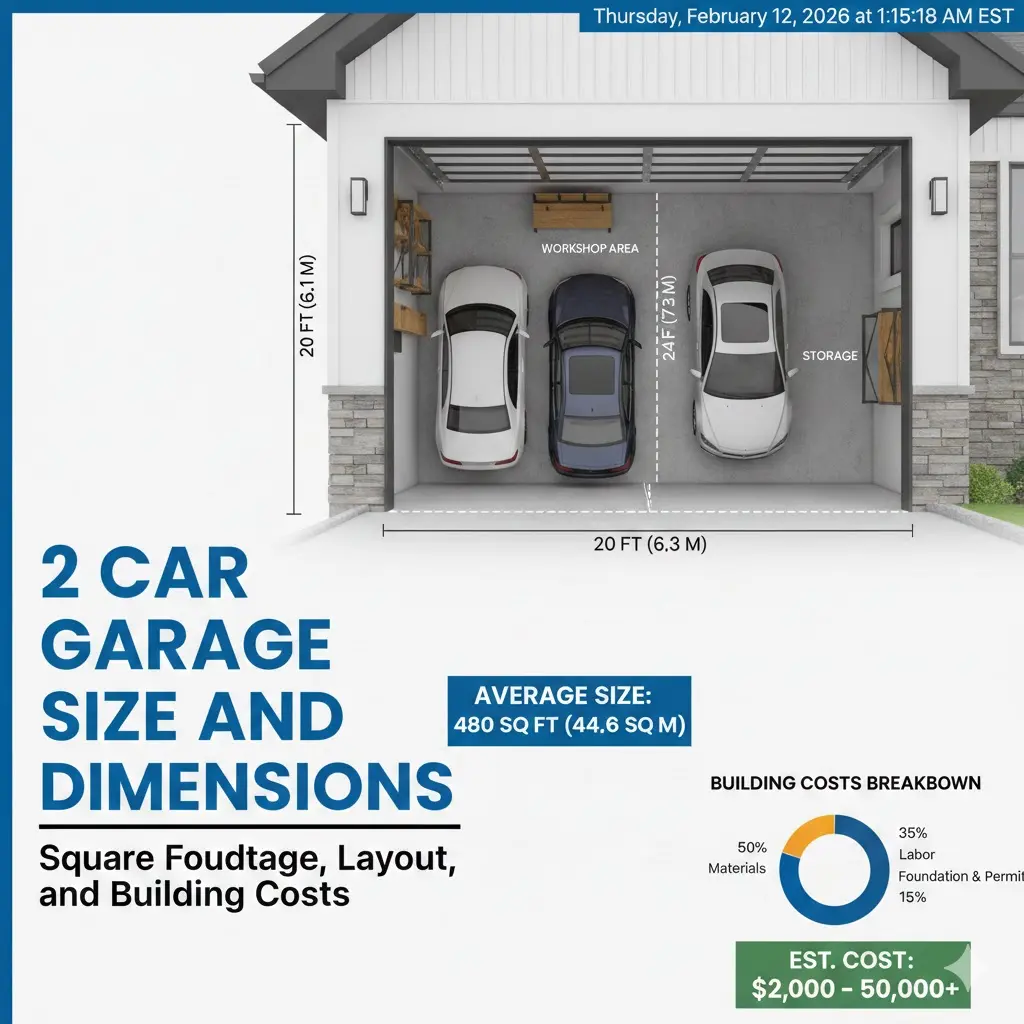
Garages: Depending on the building code, many garages will require fire-rated drywall, costing $1,000 to $2,500.
Kitchens: As kitchens will use both standard drywall and water-resistant drywall, the cost falls within $1,500 to $3,000.
Costs specific to the room often represent not only a difference in materials, but also a variation in overall cost due to the labour involved relative to the amount of cutting necessary around doors, windows, outlets, and plumbing.
Drywall Cost Breakdown: Material vs. Labour
The installation of drywall involves both materials and labour; knowledge of this cost breakdown is valuable for homeowners trying to budget. The cost of materials typically represents 25–35% of the total cost, while labour represents 65–75%.
For example, for a cost of $2,000 to install drywall
Materials may cost $500-$70.`
Labour would be the remaining $1,300-$1,500.
The labour portion is more expensive because drywall installation involves multiple steps: hanging, taping, mudding, sanding, and finishing. Each of these steps requires time and skill, esp. if a smooth or level 5 finish is specified.
Factors Affecting Drywall Price Per Square Foot

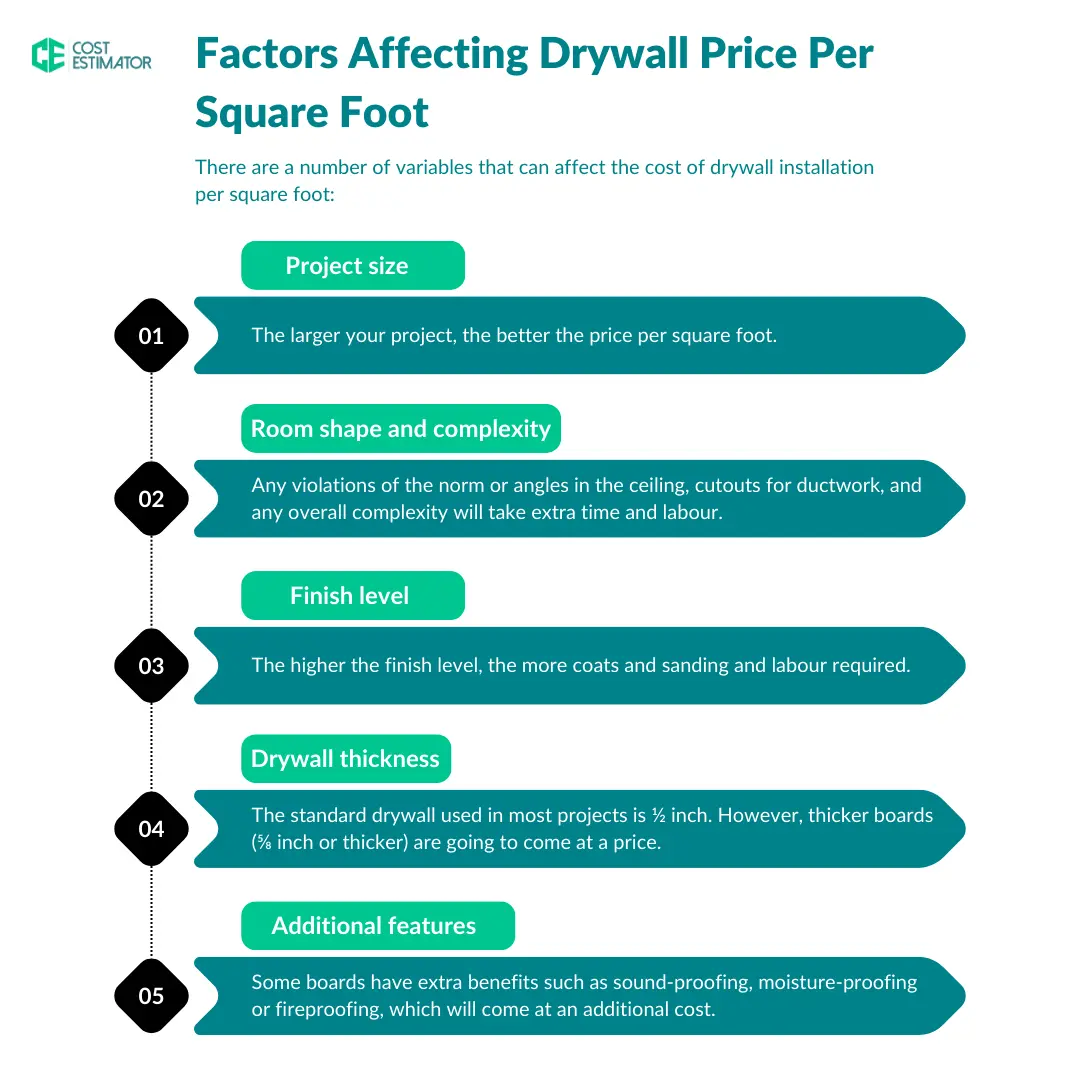
There are a number of variables that can affect the cost of drywall installation per square foot:
- Project size- The larger your project, the better the price per square foot.
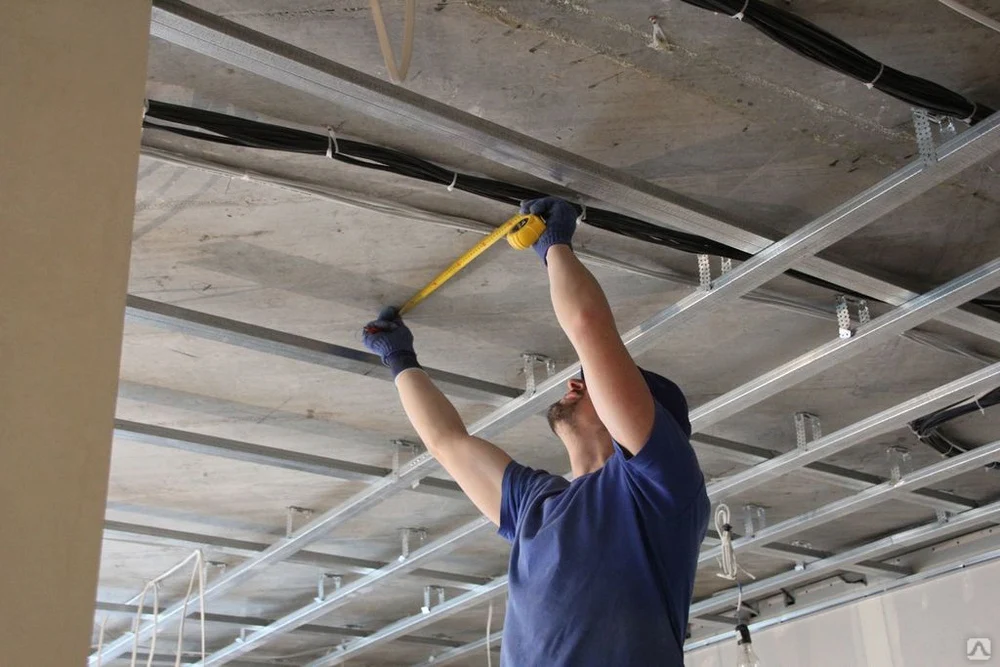
- Room shape and complexity- Any violations of the norm or angles in the ceiling, cutouts for ductwork, and any overall complexity will take extra time and labour.
- Finish level- The higher the finish level, the more coats and sanding and labour required.
- Drywall thickness- The standard drywall used in most projects is ½ inch. However, thicker boards (⅝ inch or thicker) are going to come at a price.
- Additional features- Some boards have extra benefits such as sound-proofing, moisture-proofing or fireproofing, which will come at an additional cost.
Cost to Repair Drywall vs. Install New Drywall
Repairing drywall is typically less expensive than a full replacement, although the total costs will depend on the size and extent of the damage. Small repairs such as patching nail holes and minor cracks will likely cost somewhere between $100 and $300. Medium repairs like larger holes and repairing damage from water could cost anywhere from $300 $800. On the other hand, replacing the drywall in an entire room is likely to cost $1,000 to $3,000 or higher based on square footage. Again, depending on the extent of the damage, if it is extensive, full removal may ultimately be less expensive than repeated repairs.
Regional Differences in Drywall Installation Cost
Drywall installation costs can also differ regionally in 2026, due to labour rates, available materials, and demand. For example:
Urban Areas: Manual labour continues to bear greater costs, so in metropolitan areas (with a higher cost of living), drywall installation can range from $2.50 to $4.50 per square foot.
Suburban Areas: Areas that do not have a higher cost of living will likely average costs of $1.75 to $3.00 per square foot.
Rural Areas: Costs will typically reflect lower labour rates, which may lower costs from $1.50 to $2.50 per foot of drywall;l, however, the cost of material delivery may outweigh the savings.
Additionally, if a region experiences high humidity, the costs of mould-resistant drywall, fire-rated drywall (for areas of strict fire codes) could increase costs.
Ways To Save Money On Drywall Installation
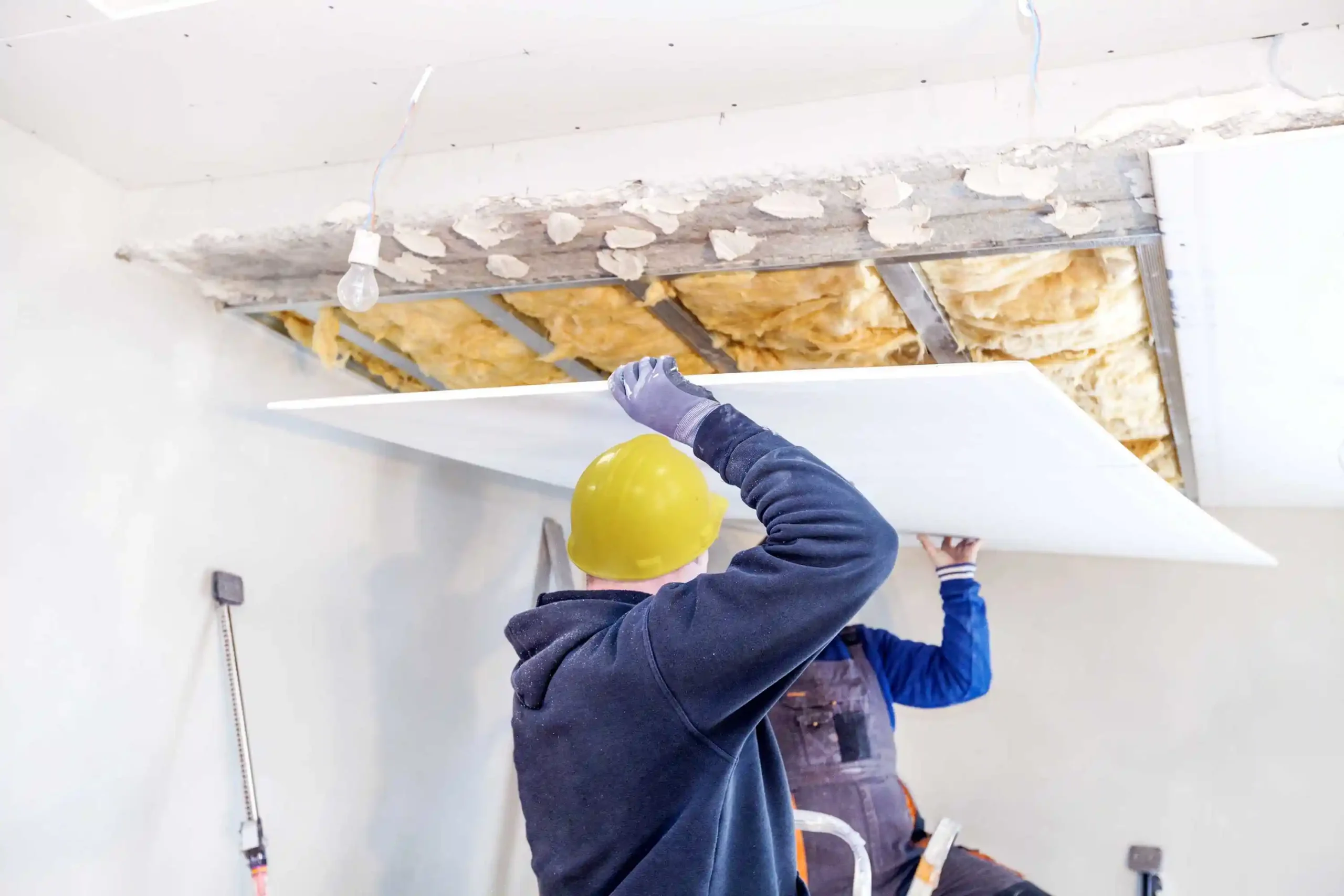
Drywall installation is an investment; however, you can save on installation costs without jeopardising the quality of the work you contract. Here are ideas to save costs:
Get More Estimates: Get a minimum of three quotes and compare estimates to make sure you are getting a fair price.
Buy Materials together: The part of your invoice that’s most flexible is the labour cost. If you have several rooms to finish, it may be cheaper to buy drywall in one shipment instead of ordering it individually for each room.
Stick with standard finishes: Only use high-level finishes where they will be seen, and use basic finishes in places like garages and storage areas.
Bundle projects: If you aren’t able to share labour costs with other basic renovation trades, you may still bundle your drywall installation with those trades to avoid mobilisation costs.
Do small repairs: You can typically hire a contractor or tradesperson to do repairs, but small repairs, like patching holes/cracks, are usually within a homeowner’s capabilities usually and the savings you will experience will be with labour costs.
Conclusion
In 2026, drywall continues to be one of the most inexpensive and flexible building materials. Whenever a homeowner looks to install interior walls and ceilings, drywall is often the best option. The cost of installing drywall would largely depend on which type of drywall, finish options (if applicable), the size of the room being worked on, and labour rates in the area. Overall, you can expect to range on average between $1.50 and $3.50 per square foot.
Simply gaining an understanding of the range of material and labour breakdown by region will put you in the best position to make an informed decision and budget properly. Whether you are planning a small renovation or an entire home build, with the help of this 2026 drywall installation cost guide, you should be able to begin planning with ease.
FAQs
Q1: What is better, Sheetrock or drywall?
Sheetrock is a brand name of drywall that has a reputation for better quality or consistent quality. Although it is a little more expensive, Sheetrock is preferred by many contractors over other brands of drywall. There is nothing wrong with standard drywall, as it is still quality material and is more economical.
Q2: How long does a drywall installation take?
For a standard room, depending on how big it is, the installation can take two to five days. This timeframe includes drying time between mudding and sanding. For larger projects, it can take weeks.
Q3: What is the most expensive drywall?
Soundproof drywall can be the most expensive, followed by mould- and moisture-resistant drywall.
Q4: Can I install drywall myself?
You can, but it can be labour-intensive. A skilled professional can do the work better than you, particularly if it is for a high-level finish.
Q5: Does drywall add value to a home?
Yes. Professionally installed drywall enhances the appearance of a room, improves energy efficiency, and adds value to your property.